


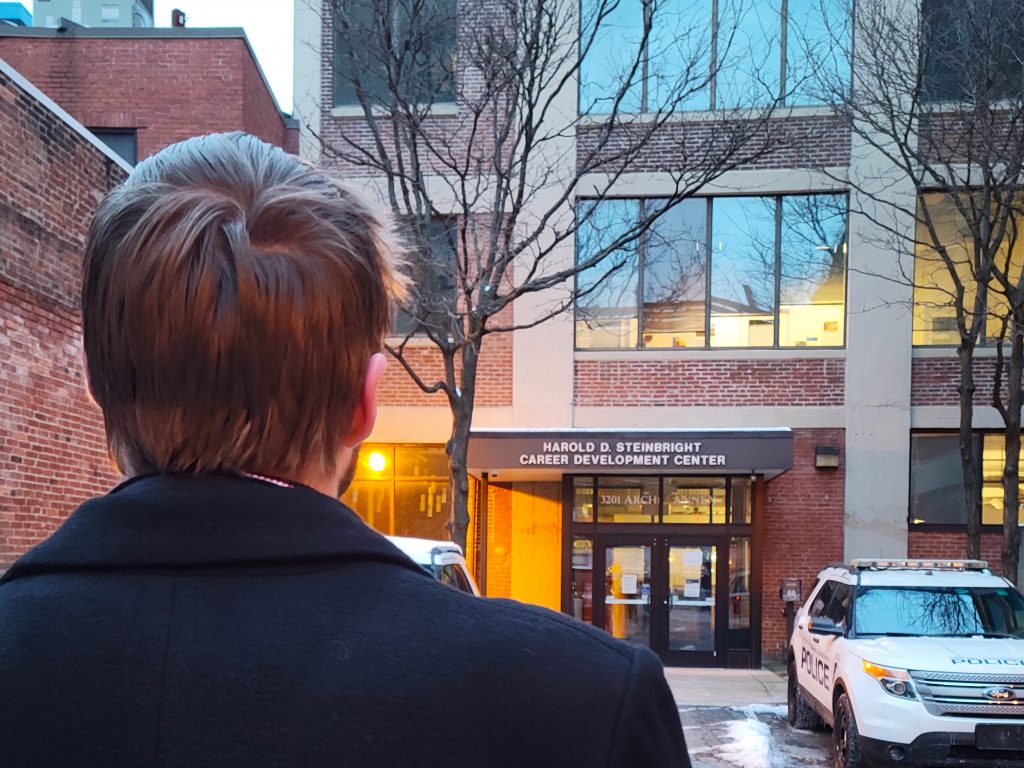
On Wednesday, Nov. 19, the Steinbright Career Development Center sent an email announcing that the 2026-2027 spring/summer co-op will be shortened by one month, as well as the first fall semester co-op in the 2027-2028 academic year. The revised co-ops will end and begin in early August 2027, instead of in September.
The change comes as one of many being announced as the Academic Transformation looms ever nearer. Some of the adjustments being made have already stirred unrest in the student body, such as the splitting of the summer term, but nothing has caused the same uproar as shortening two co-ops. Many students choose Drexel for its co-op program, and the prospect of shortchanging students is not well-received.
The announcement states that after the transition, co-ops will return to their normal length and that students “[will] continue to have the opportunity to participate in multiple co-op cycles,” but, critically, not every Drexel student is enrolled in a five-year, three-co-op program.
For many four-year one co-op students, their singular co-op is cut short, with no amends by Drexel. The general sentiment among students seems to be outrage; there is some dissent, although no one is really happy about it.
The most positive reflection on the announcement was from Navneeth Nalajala, a first-year biology major. “While it’s technically not the best for me, I don’t mind it too much,” he told The Triangle.
The problem is exacerbated for certain programs; for the Entertainment & Arts Management Program, students’ four-year one-co-op program is already unique, given the nature of the music industry. One co-op is split into three months during sophomore year and three months during the summer of junior year.
The university has been slow to clarify the plan of action for unique majors like this one. Students like Molly Sample, a first-year EAM student, are preparing for the possibility that her sophomore-year co-op will be canceled and that her co-op time will be cut by half. She felt that “at one point I didn’t even know if I was gonna get a co-op.”
Drexel’s piecemeal dissemination of information hinders students who have to apply for these jobs around November. The university’s official Frequently Asked Questions only suggests that students “[c]onsult with [their] academic advisor and program director about impact on your summer-only co-op.”
Even in the five-year three-co-op cohort, news of one fewer month of work can be jarring. Students like M Pfeiffer, an environmental science major, have “been planning on that six months of pay,” and to have it taken away is going to significantly alter budget calculations. Drexel advertises the paid nature of co-ops, and given the extent of tuition and housing expenses, many students rely on co-op revenue to cover them.
As Drexel continues to push forward despite the agitation felt by the student body — all in the name of improving the student experience through its Academic Transformation — it begs the question of whether the university’s efforts will actually prove fruitful, and how Drexel can recompense its affected students.