


Journalism is often dismissed and written off as a “useless” field, but I cannot think of anything more useful than educating the public on matters that affect them. Journalism is a broad field, ranging from investigative and broadcast reporting to travel writing and opinion. The many forms of journalism signify the ever-adapting field, shifting from traditional newspapers to digital platforms, including magazines and multimedia storytelling.
When propaganda, fear-mongering, and social media filled with misinformation surround us, journalists attempt to uncover the truth. They give people a voice, holding individuals accountable, and making stories heard. It is a privilege to be able to write freely, without fear of censorship, and something I hope we as a generation do not take for granted.
Over the past few decades, the field of journalism has faced constant struggles. As print has been challenged by online publications and social media often determining what news really matters. Today’s journalists face a rapid increase in public mistrust of the news, funding cuts, shrinking newsrooms, and navigating the ever-growing fear of AI replacing them. Despite these challenges, the field perseveres through dedicated professionals who strive for accurate information to relay to the public.
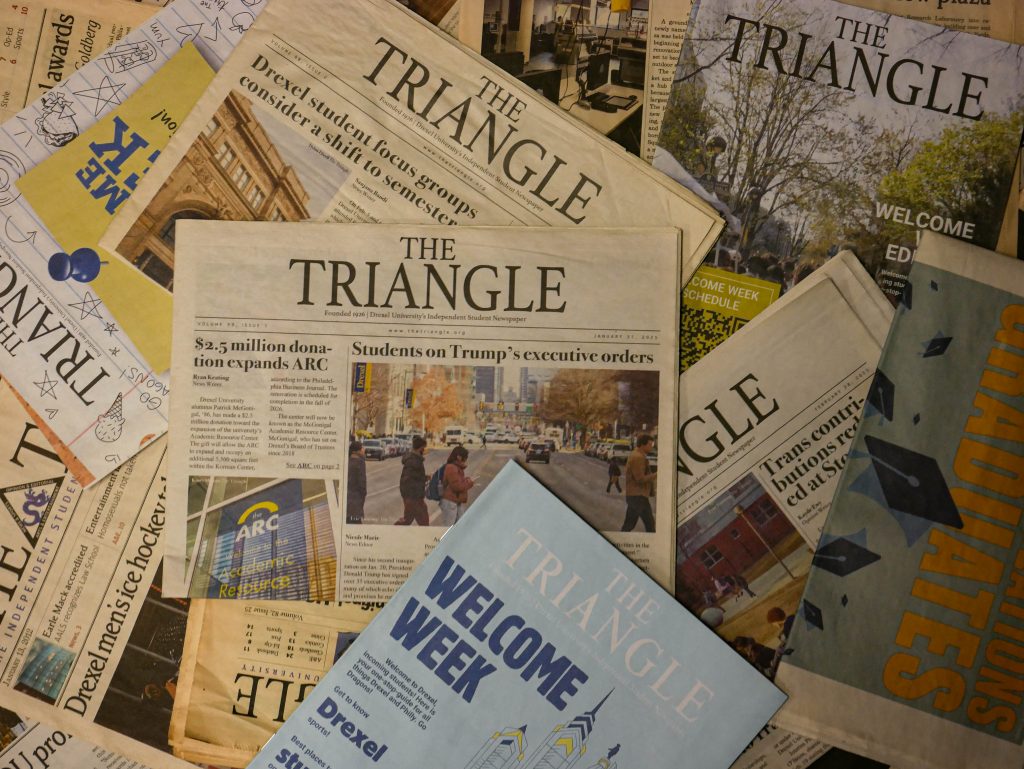
My favorite part of journalism is giving a voice to those unable to speak up for themselves; to give someone a chance to tell their story, which otherwise may have been ignored. Whether it is an op-ed, a news article, or a podcast, journalism takes various forms, but the purpose remains the same. Journalism has been around for centuries, but at Drexel University, The Triangle, the university’s independent student-run newspaper, has been around for 100 years.
Writing for a school paper gives student journalists a unique lens on the world. Constantly asking yourself: can this be a story? Is this breaking news? Has anyone talked about this yet? The adrenaline rush of heading to an event, taking photos, interviewing new people, asking questions, and learning about issues you never thought you would cover. Then comes the aftermath of sorting through all of the data, picking out quotes, and sitting behind your laptop to write a piece you are passionate about. Discussing and reporting on matters that may not affect you, but the community around you. That, to me, is real journalism.
Through The Triangle, students can meet new people and learn about events that affect Drexel students, such as academic transformations, on-campus store closures, and new leadership changes. The paper amplifies students’ and professors’ voices to inform our Drexel community and document its constant change. The Triangle has adapted alongside the journalism industry, emphasizing its role as an independent student voice. Being independent is crucial, as we exist at the intersection of education and accountability, giving students a platform to voice their opinions.
One hundred years ago, The Triangle began as a student effort to inform and connect the Drexel community. A century later, that mission still holds. Journalistic tools may evolve, but the purpose remains the same. Student journalism matters!
So, on Fridays, when someone hands you a newspaper near the Mario statue, take a moment to read it! I guarantee you will not be disappointed.