


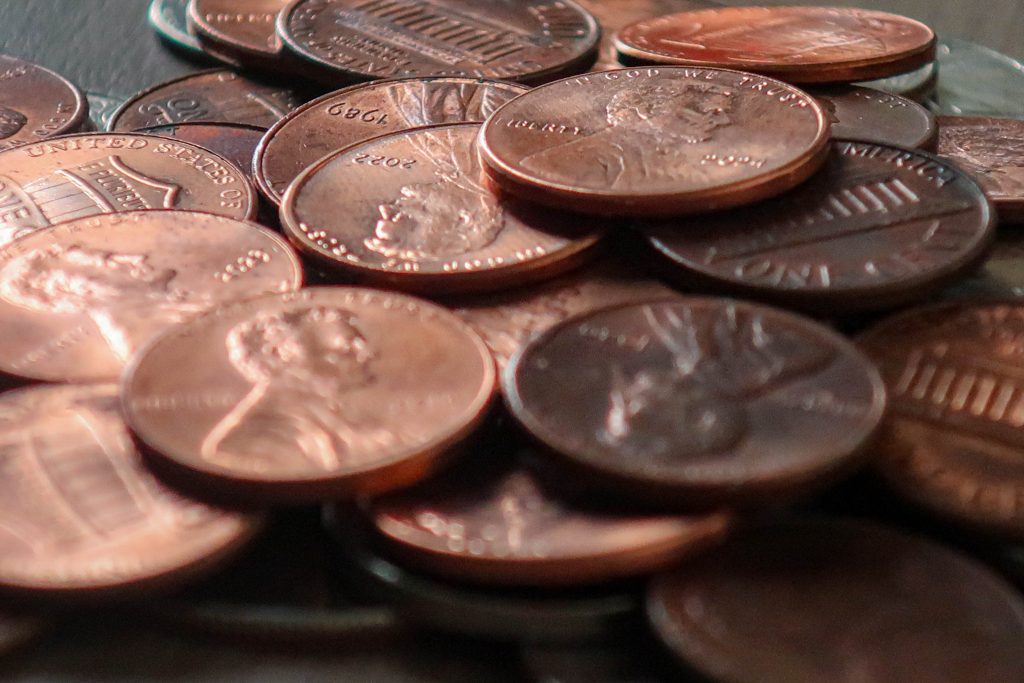
Imagine you are at the cash register and your total is five dollars and 29 cents. You are digging in your wallet for exact change, a five-dollar bill, a quarter, and four pennies, but you do not have any pennies. This scramble for four extra cents represents something deeper, looming in our country. Every day, there is something new that our federal government decides to remove, leaving the average constituent to feel powerless when faced with the effects of these asinine decisions. President Trump ordered the U.S. Treasury Department to stop production of the penny. By Wednesday, Nov. 12, 2025, it was announced to the public that after 230 years, they would be complying with the orders from the president. While we head into a digital age, this decision can seem like a positive one, but I am here to tell you that it is not.
There is no need to worry immediately if you were concerned when you heard the news, like me. There are 114 billion pennies currently in circulation. Many that have been collected or stored away in coin jars or in forgotten places, but besides that, the coins will remain in circulation for the next few decades until they are eventually phased out. However, I am here to tell you that by our government making this decision, it is only the beginning of a cashless world. Pennies cost approximately $3.69 cents to produce. Rachel Treisman from NPR discussed Trump’s plan to scrap the penny months prior due to the disturbing report from the Department of the Treasury, as they said, “…in its annual report that it lost $85.3 million on the nearly 3.2 billion pennies it produced in fiscal year 2024.” President Trump argues, “For far too long the United States has minted pennies which literally cost us more than 2 cents,” he wrote on Truth Social. “Let’s rip the waste out of our great nation’s budget, even if it’s a penny at a time.” He makes it a point to tell his readers that minting the penny is wasteful, but if he believes that, then we can assume the next action would be to stop the production of the nickel as well. Nickels cost approximately thirteen cents to produce, which is arguably worse. We are inching toward a cashless society, whether you like it or not.
You might ask if the penny is so expensive to our economy, why has it been kept for so long? Well, the answer is what economists call the “rounding tax.” This is where prices will require rounding of cash payment amounts to their nearest zero cents, five cents (nickel), or ten cents (dime), and the result will end up costing Americans more. This inherently affects minority groups and low-income individuals. Due to this tax, it will force low-income people to spend more facing higher grocery bills, higher gas prices, and overall higher daily expenses. Despite the majority of our president’s supporters being people of the working class, he tends to alienate them to appeal to the one percent. The working class is what has built America, and the idea of eliminating the penny would negatively affect cash users. So while we are using less cash than we used to, falling under 20 percent, this change will affect people who are socially and economically disadvantaged. Immigrants are specifically targeted with this change. They are people who may not always be able to have access to a bank account, credit cards, or other banking services due to the difficulty of obtaining a Social Security number or individual taxpayer identification number. When you specifically alienate minority groups like this, you hurt them financially when you put in place rounding taxes.
What concerns me the most is the direction this decision will eventually lead us. Hypothetically, we will continue to phase out coins, starting first with the penny, then the nickel, then the dime, etc. Many statistics report that 16 percent of overall transactions in the U.S. involve cash, a figure that has continued to decrease as 40 percent of people report no longer using cash. Most people depend on their debit or credit cards to get around, often not even carrying the physical card because it is uploaded into the Apple/Samsung wallet. Even though this is convenient for a lot of Americans due to the fast-paced transactions, easy budgeting features, enhanced security, rewards, and hygiene factors, we are still left excluding minority groups, including the elderly, disabled people, low-income individuals, and even people who live in rural areas without access to the internet. Many of these people are excluded by having limited access to banking, as well as unreliable internet or inconsistent phone service. When you have a cashless system, it requires smartphones, banking apps, internet access, and digital literacy which these groups do not always have. Now, not only does this technology exclude people, but it also creates a slippery slope of overreliance on such smart technology, especially when considering factors like privacy, potential overspending, and transaction fees. At the same time, technical glitches, network outages, or software bugs exist without a cash alternative in place.
So yes, I understand why the U.S. The Treasury Department halted production of the penny. They claim it is for the good of all Americans and the positives outweigh the negatives, but in reality, this is just the opposite. It is about accessibility and economic fairness. By even entertaining a cashless society, we make the assumption that the whole of the United States has equal access to banking, technology, and digital payment systems. This is an assumption that is simply not true. We cannot ignore the negatives when the consequences of this decision will be blatantly in our faces. A cashless society seems to be on the horizon, and unless U.S. policymakers focus on prioritizing all Americans over their own financial interests, with a decision like ending penny production, it only widens the gap of existing inequalities that continue to divide us.